Pacific · United States vs Japan
Battle of Peleliu
15 September 1944 – 27 November 1944
The 1st Marine Division landed on Peleliu in the Palaus expecting a few days' fight and met the first fully developed Japanese cave defence, dug into the coral ridges of the Umurbrogol. The Marines were relieved by the Army's 81st Division after a month and the last pocket held until late November. The airfield had little effect on the Philippines campaign it was meant to support.
Explore Battle of Peleliu on the interactive map · Wikipedia
Day by day
— The landings
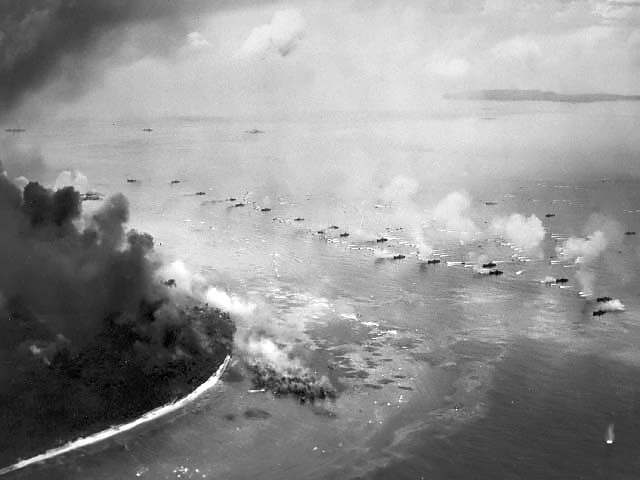
The 1st Marine Division lands on the western beaches at 08:32 in heat above 100 degrees, into flanking fire from the coral heads at either end of the reef. A Japanese tank and infantry counter-attack across the airfield in the afternoon is broken up in under an hour. By dark the beachhead is about three kilometres wide and 1,100 Marines are casualties.
— The airfield
The 5th Marines cross the airfield at a run under observed fire from the ridges to the north and reach the eastern shore. The 7th Marines turn south for the Ngarmoked peninsula. Nakagawa's men do not counter-attack again in the open: from here on every position is a cave in the coral.
— Bloody Nose Ridge
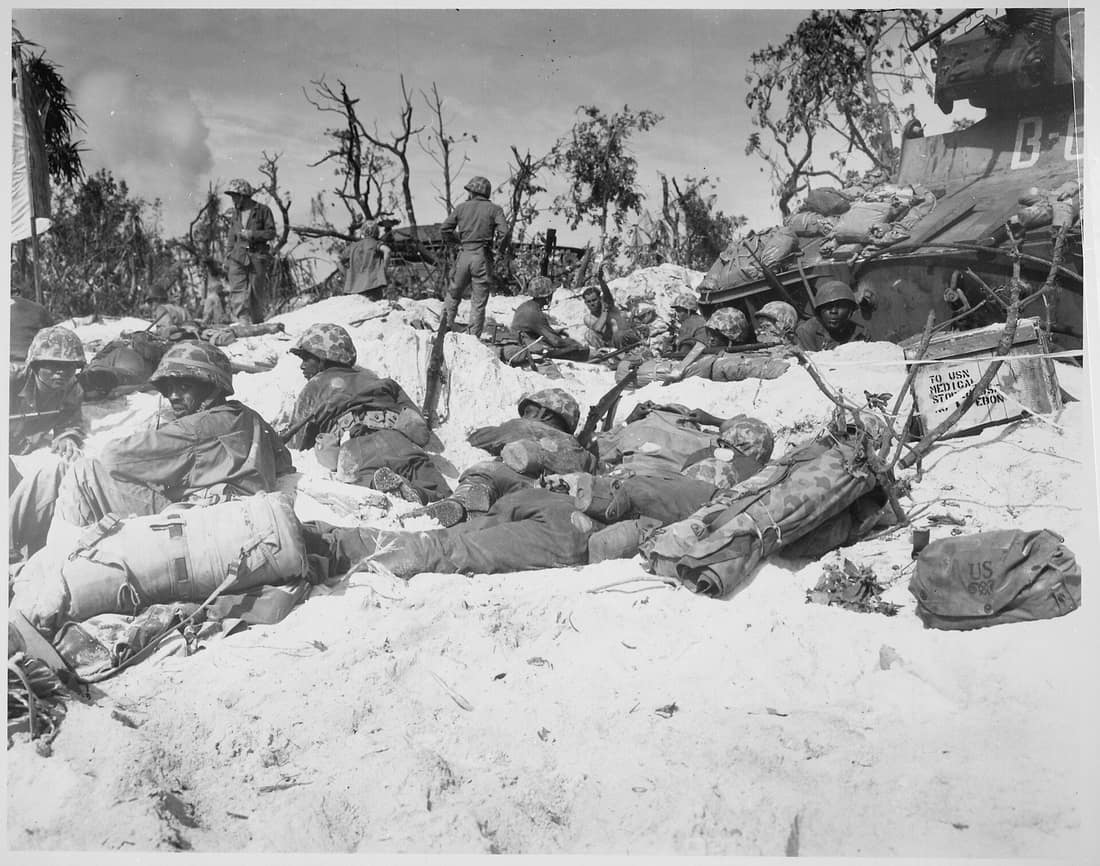
The 1st Marines attack north into the Umurbrogol, a spine of shattered coral honeycombed with mutually supporting caves, and are fought to a standstill on the ridge the Marines call Bloody Nose. In six days the regiment loses more than half its strength and is taken out of the line; the 321st Infantry lands on 23 September to replace it.
— Ngesebus
The 5th Marines, sent round the pocket to clear the northern arms, cross to Ngesebus in amtracs behind a low-level strafing run by Marine Corsairs and take the island in a day. The Umurbrogol is now cut off from the rest of Peleliu and can be reduced at leisure.
— The Army takes over
The 81st Infantry Division formally takes over the reduction of the pocket, now about 500 metres across, and works it in with bulldozers, sandbagged flamethrower tanks and demolition charges rather than infantry assaults. The last Marines leave the island in the same week.
— The last pocket
Nakagawa burned his colours and killed himself on 24 November; the last of his men are cleared from the Umurbrogol on the 27th and the island is declared secured after 73 days. Some 1,800 Americans are dead and over 8,000 wounded, and almost the whole garrison of 11,000 has died. The airfield played no part in the Philippines landings it was taken to protect.