Eastern Front · Germany and Romania vs Soviet Union
Siege of Sevastopol
30 October 1941 – 4 July 1942
Manstein's 11th Army overran the Crimea but was held for eight months before the fortress port of Sevastopol. Two assaults failed; the third, in June 1942, was supported by the heaviest artillery concentration of the war, including the 800 mm gun Schwerer Gustav.
Explore Siege of Sevastopol on the interactive map · Wikipedia
Day by day
— Into the Crimea
Manstein's Eleventh Army forced the Perekop isthmus and broke out at Ishun on 28 October, and its divisions are racing south across the steppe for the ports. The 51st and Coastal Armies fall back on Kerch and on Sevastopol. A battery of the fortress opens fire on the leading German column near Bakhchisaray on 30 October: the first shots of the siege.
— The second assault
The first attempt in November got nowhere. On 17 December the Eleventh Army attacks again with six divisions, the main effort down the Belbek valley towards Mekenzievy Gory and the north side of the great bay. It is within two kilometres of the bay when the Soviet landings at Kerch and Feodosiya on 26 December force Manstein to break off and send his reserves east.
— Storfang
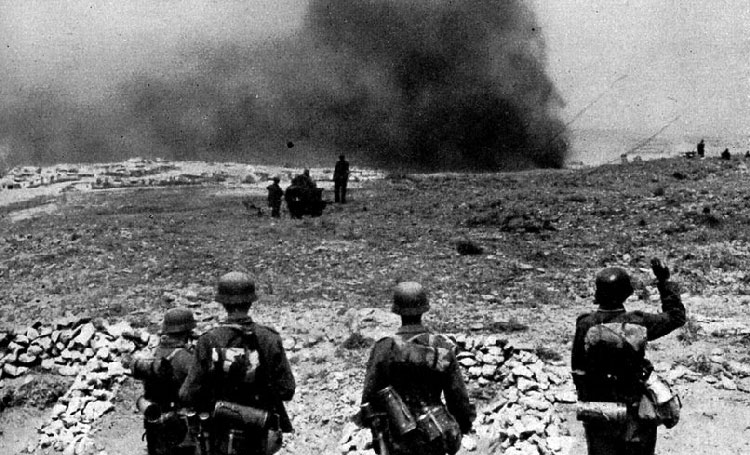
The Kerch bridgehead was destroyed in May and the whole of the Eleventh Army can now be turned on the fortress. Five days of bombardment open on 2 June: 600 guns, among them the 615-millimetre Karl mortars and the 800-millimetre railway gun Gustav, whose shells weigh seven tonnes. Fliegerkorps VIII flies over a thousand sorties a day.
— The northern side
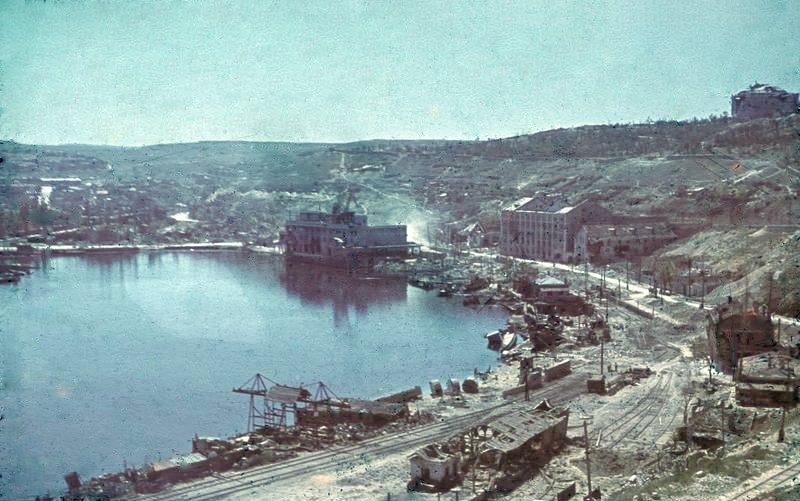
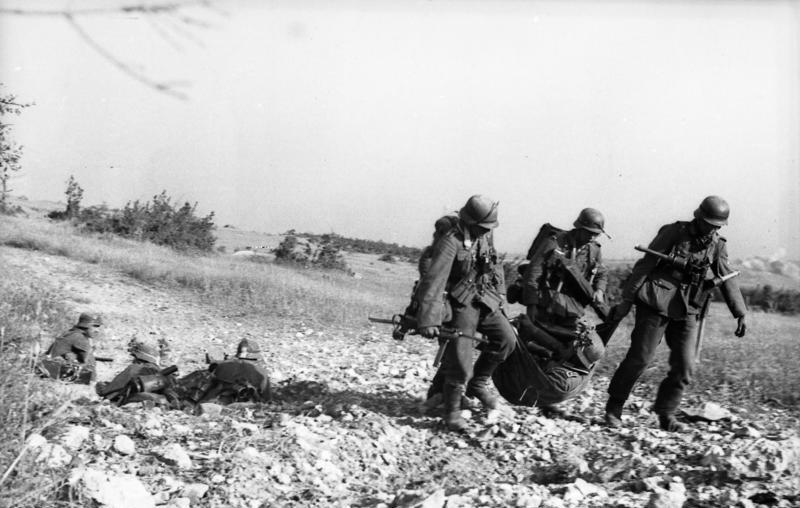
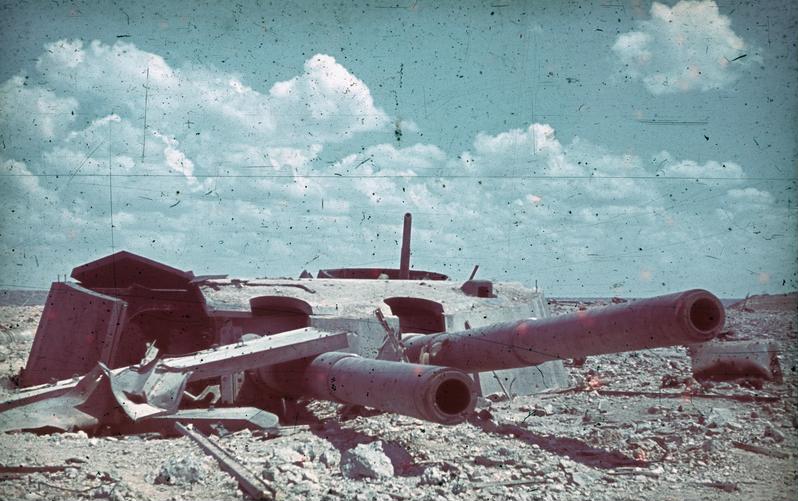
The infantry go in at 03:50 on 7 June against the strongest sector, the forts north of the Severnaya bay. Fort Stalin falls on the 13th and the north side is cleared by 21 June, at a cost the German divisions never make good. The defenders are down to a handful of shells a gun and are being supplied by submarine and fast minelayer.
— The city falls
The Germans crossed the Severnaya bay in assault boats before dawn on 29 June and took the Sapun ridge the same day. On the 30th Petrov and the senior officers are flown and shipped out on Stalin's order, about 700 of them, and the rest are told to fight on. Fighting goes house by house through the ruins of the city.
— Cape Chersonese
The last of the garrison, some tens of thousands with no ships coming for them, are pressed onto the cliffs of Cape Chersonese and taken on 4 July. The siege has lasted 250 days and cost the Eleventh Army about 36,000 casualties; Manstein is made a field marshal the same week. The Crimea is clear, and the army that took it goes north to Leningrad instead of east to the Caucasus.