Pacific · United States vs Japan
Battle of Iwo Jima
19 February 1945 – 26 March 1945
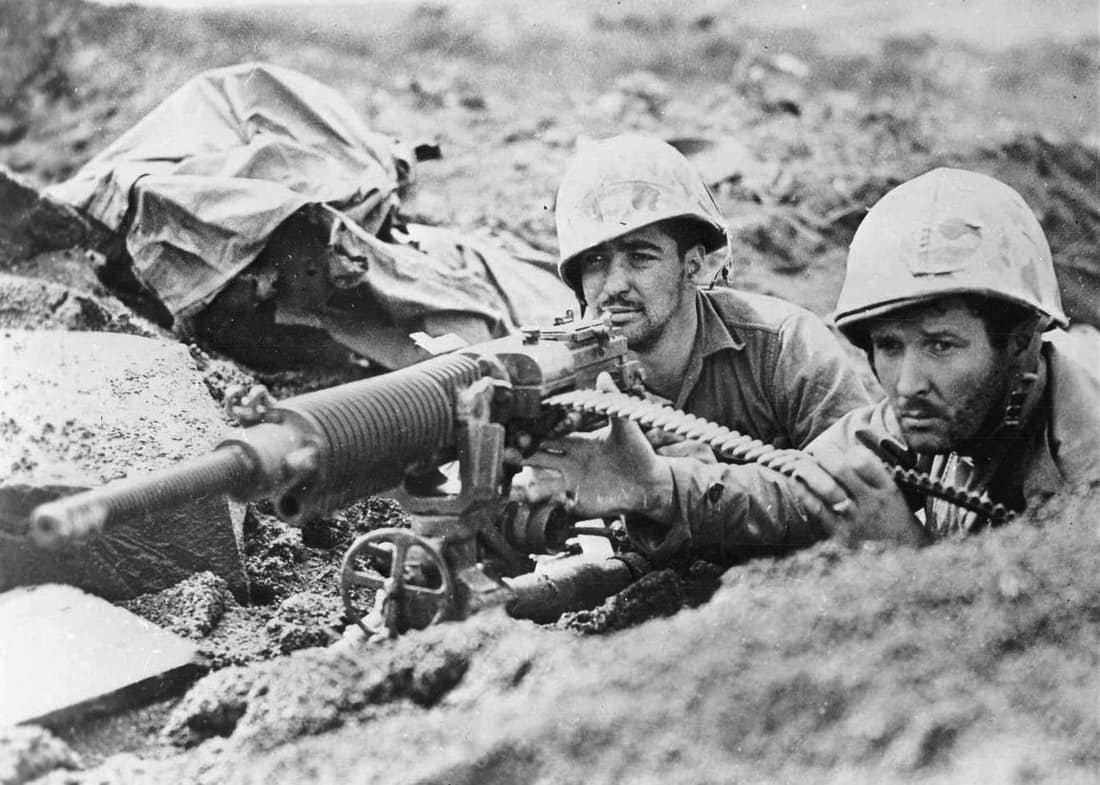
Three Marine divisions assaulted a volcanic island eight square miles in area, defended by 21,000 Japanese in a network of tunnels and bunkers under Kuribayashi's orders to inflict maximum casualties rather than die in banzai charges. The fight lasted five weeks and cost nearly 7,000 American dead, the only Pacific battle in which American casualties exceeded Japanese. The island served as an emergency field for B-29s.
Explore Battle of Iwo Jima on the interactive map · Wikipedia
Day by day
— D-Day
Two Marine divisions land on the south-east beaches at 09:00 and sink to their knees in black volcanic ash under fire from Suribachi and the Motoyama plateau. By dark 30,000 men are ashore across the neck of the island, and 2,400 are already casualties.
— The flag
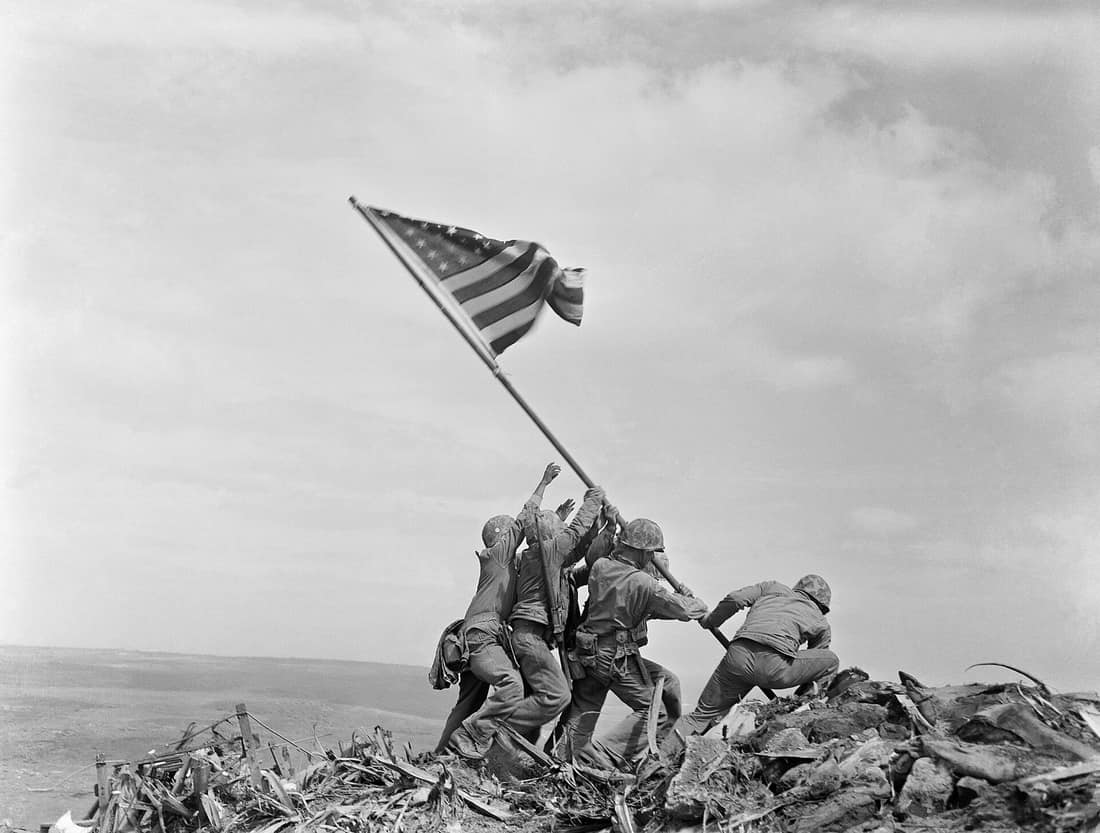
A patrol of the 28th Marines reaches the crater of Suribachi at 10:20; the second, larger flag goes up at noon and Joe Rosenthal photographs it. Airfield No. 1 has been in Marine hands since the 21st. The 3rd Division is landing to take the centre.
— The Meat Grinder
Airfield No. 2 and Hill Peter are taken after four days; the 4th Division is still fighting for Hill 382, the Amphitheatre and Turkey Knob, a complex the Marines call the Meat Grinder. Every position is a cave, and the Japanese do not counter-attack in the open.
— Declared secure
The island is declared secure at 18:00, which the men in the Gorge at Kitano Point would dispute. Kuribayashi's last radio message goes out the same night. B-29s have been landing on Airfield No. 1 since 4 March.
— The last attack
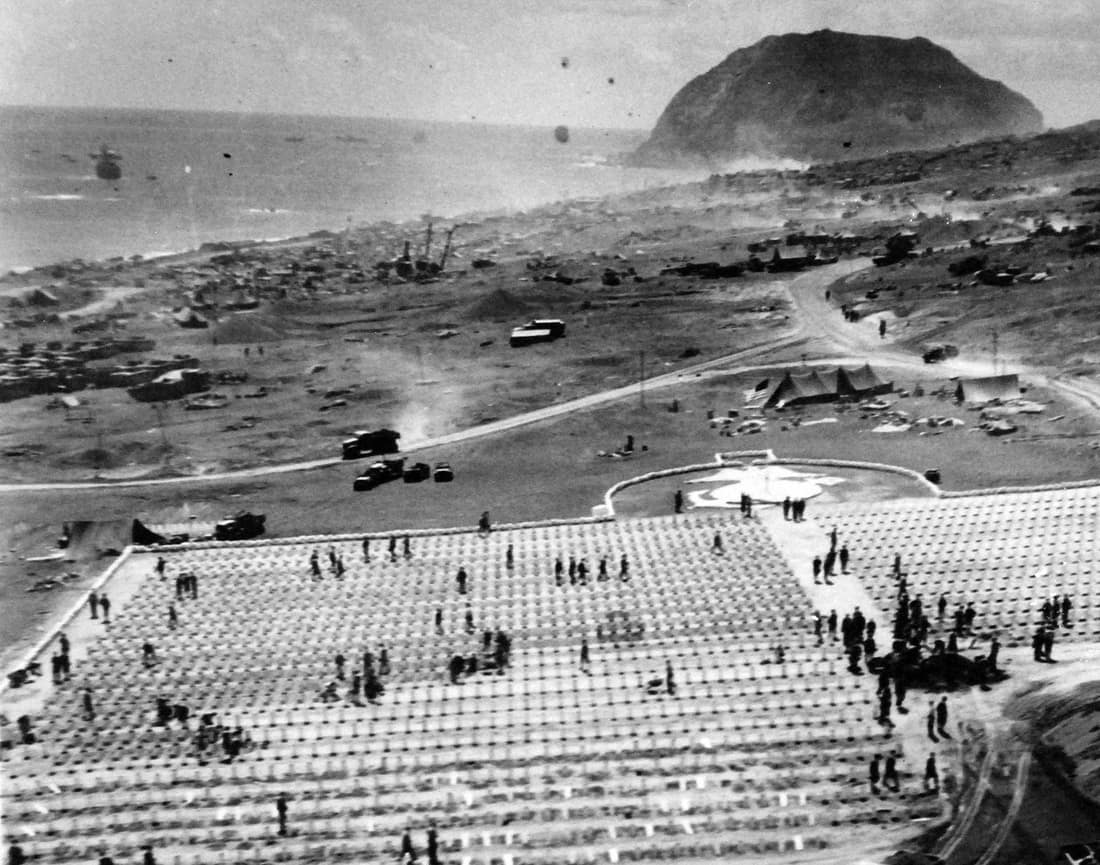
Some 300 Japanese come out of the caves before dawn and attack the bivouacs beside Airfield No. 2. The battle cost the Marines 6,821 dead and 19,217 wounded; of 21,000 Japanese, 216 were taken alive.

.jpg)
.jpg)
.jpg)