Western Europe · United States and United Kingdom vs Germany
Battle of the Bulge
16 December 1944 – 25 January 1945
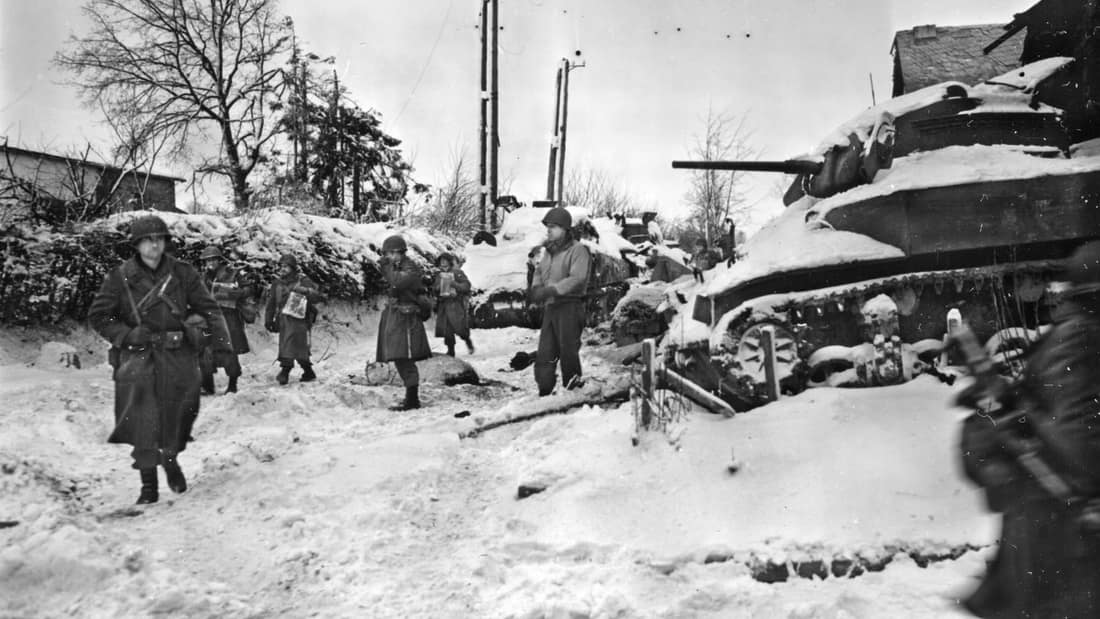
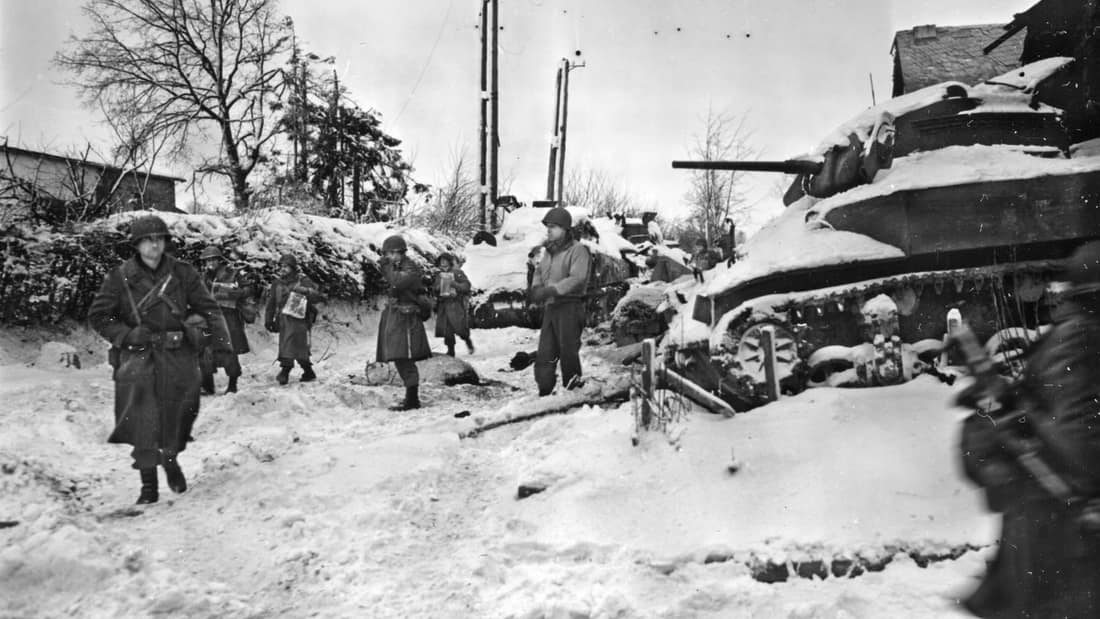
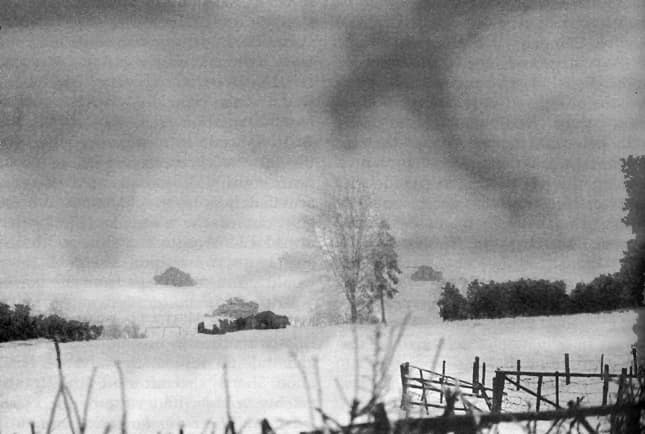
Hitler's last western offensive struck the thinly held Ardennes with three armies under fog and snow, aiming for Antwerp. American resistance at St Vith and Bastogne, and the clearing skies of 23 December, halted the drive short of the Meuse. It was the costliest battle in US Army history, with about 89,000 casualties.
Explore Battle of the Bulge on the interactive map · Wikipedia
Day by day
— The attack
At 05:30 in fog and snow, three German armies attack along a quiet 130-kilometre front held by four US divisions, two of them green and two exhausted. The aim is the Meuse, then Antwerp.
— St Vith and Bastogne
The northern shoulder holds on the Elsenborn ridge and Peiper's Kampfgruppe is stalled at Stoumont for want of fuel. In the centre the 7th Armored is still in St Vith and the 101st Airborne has reached Bastogne a day ahead of the panzers.
— High-water mark
The 2nd Panzer Division ran dry at Celles, six kilometres short of the Meuse, and was destroyed there by the 2nd Armored. Bastogne, surrounded since the 21st, is relieved on the 26th by the 4th Armored from the south. The skies have cleared and the fighter-bombers are out.
— The counter-attack
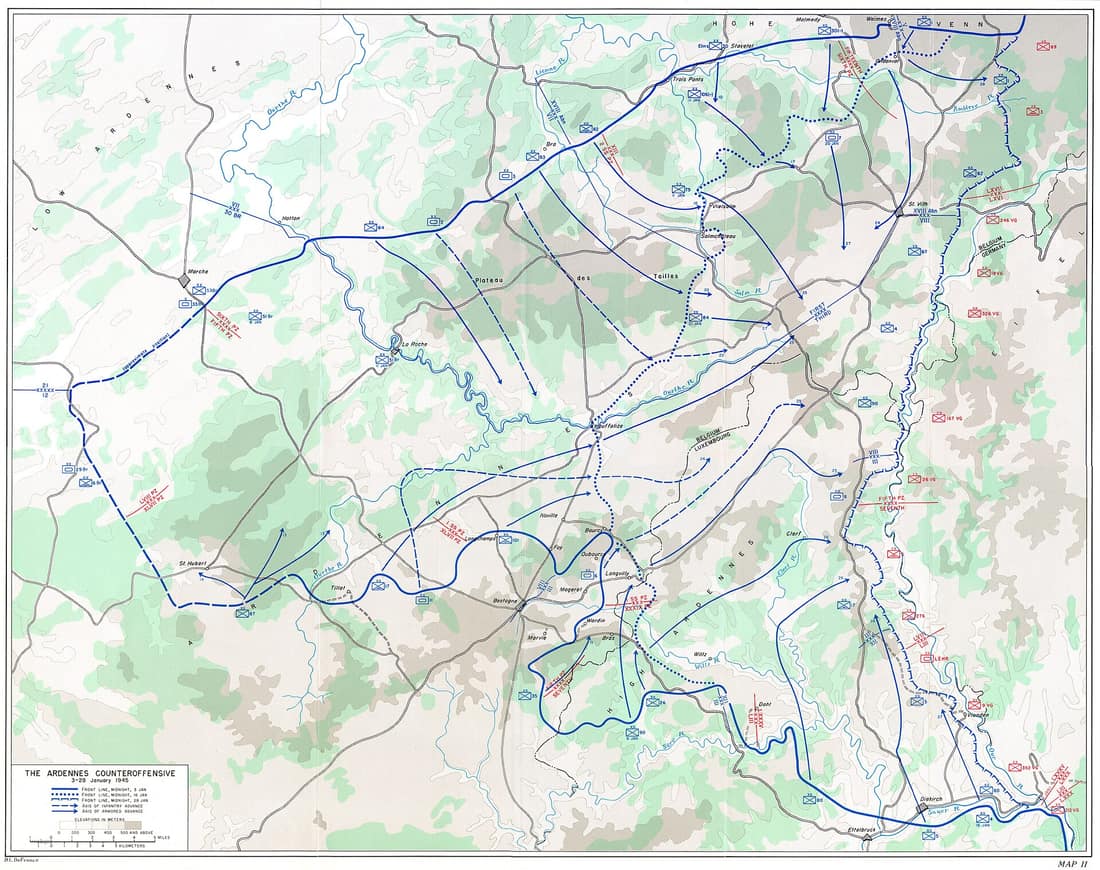
First Army attacks south from the northern shoulder and Third Army north from Bastogne, aiming to meet at Houffalize and cut the bulge in half. Deep snow and cold slow everything to a walk.
— Houffalize
Patrols of the 2nd and 11th Armored meet at Houffalize. The bulge is cut in half, but the Germans withdrawing east through the snow keep most of their men, and the fighting back to the start line takes another nine days.
— The line restored
The Americans are back on the line of 16 December. The offensive cost Germany some 80,000 men and the armour it had saved for the defence of the Reich; the Americans lost about the same, their largest battle of the war.