Eastern Front · Germany and Finland vs Soviet Union
Siege of Leningrad
8 September 1941 – 27 January 1944
German forces cut the last land route to Leningrad in September 1941 and, with the Finns to the north, blockaded the city for 872 days. Over a million civilians died, mostly of starvation in the first winter. A land corridor was opened in January 1943 and the siege was fully lifted a year later.
Explore Siege of Leningrad on the interactive map · Wikipedia
Day by day
— The last road cut
The 20th Motorised Division takes Shlisselburg on the Neva and Leningrad is cut off by land. The city holds 2.5 million people, half a million of them children, and about a month's food. Hitler's order of 22 September is that the city is to be sealed and starved rather than stormed, and any offer of surrender refused.
— The Road of Life
The bread ration is cut for the fifth time on 20 November: 250 grams a day for a worker, 125 for everyone else, and it is a third sawdust and cellulose. Tikhvin fell on 8 November and with it the railhead for the Ladoga barges. On the 22nd the first lorries drive out onto the ice from Osinovets to Kobona, and keep going all winter with the ice cracking under them.
— The hunger winter
Tikhvin was retaken on 9 December and the front is back on the Volkhov, but nothing reaches the city except across the ice. In January and February about 100,000 people a month die of starvation and cold; bodies are pulled through the streets on sledges. Some 500,000 are evacuated over the ice road in the same months.
— Sinyavino
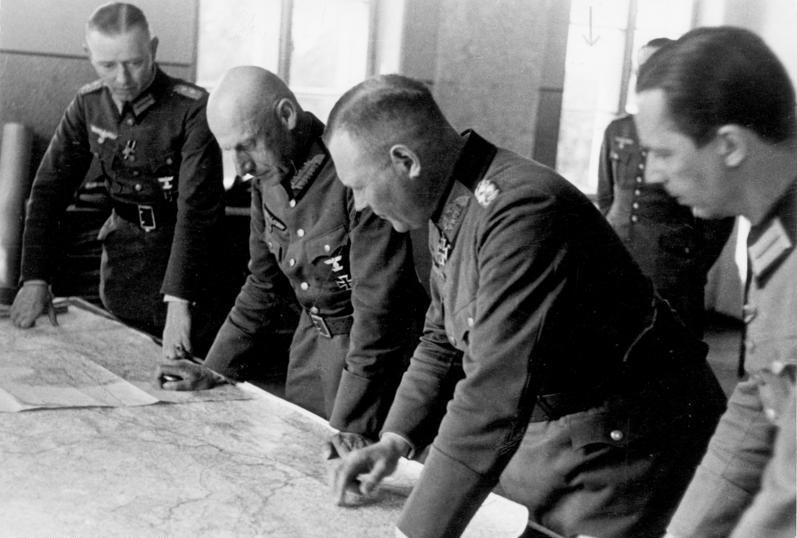
The Volkhov and Leningrad Fronts attack either side of the neck of land south of Ladoga to open a corridor. Manstein's Eleventh Army, brought up from Sevastopol to storm the city, is spent instead on stopping them. The offensive fails and costs about 110,000 men, but the assault on Leningrad is never mounted.
— Iskra
After a week of fighting through the peat bogs the 136th Rifle Division from the Neva and the 18th from the Volkhov meet at Workers' Settlement No 1, and Shlisselburg is retaken the same day. The corridor along the Ladoga shore is eight to eleven kilometres wide and under fire the whole way. A railway is laid through it in seventeen days and the first train reaches the city on 7 February.
— The siege lifted
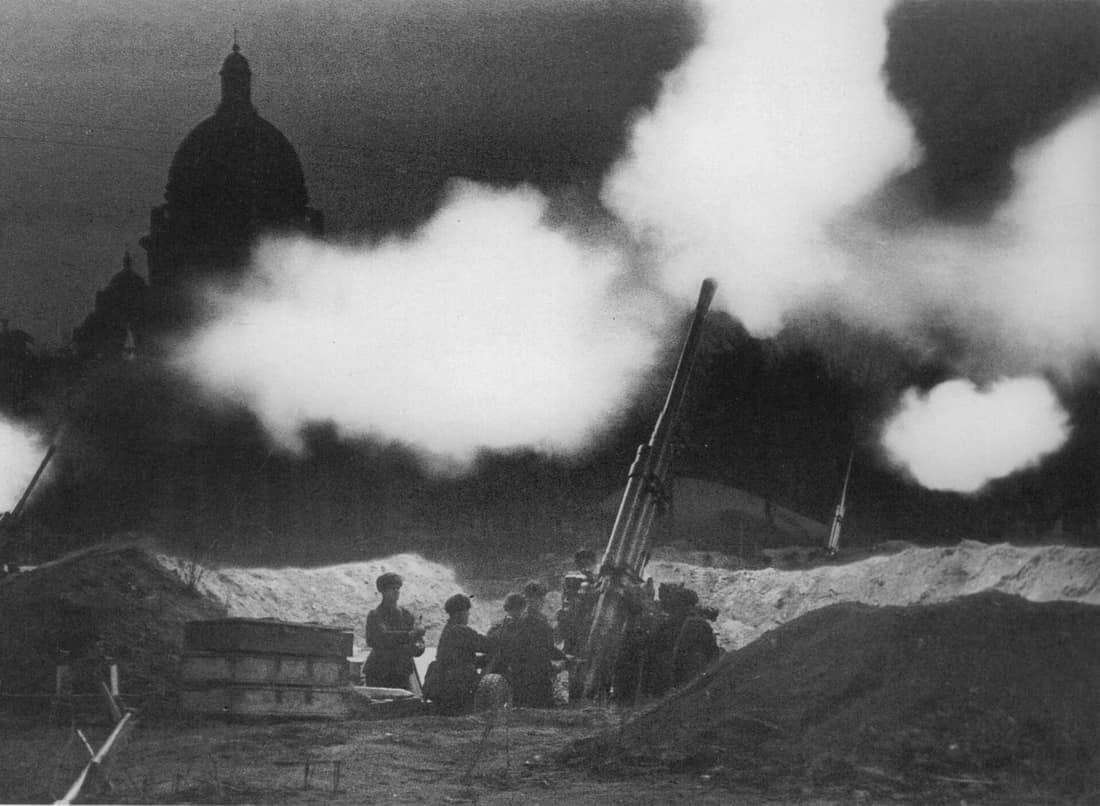
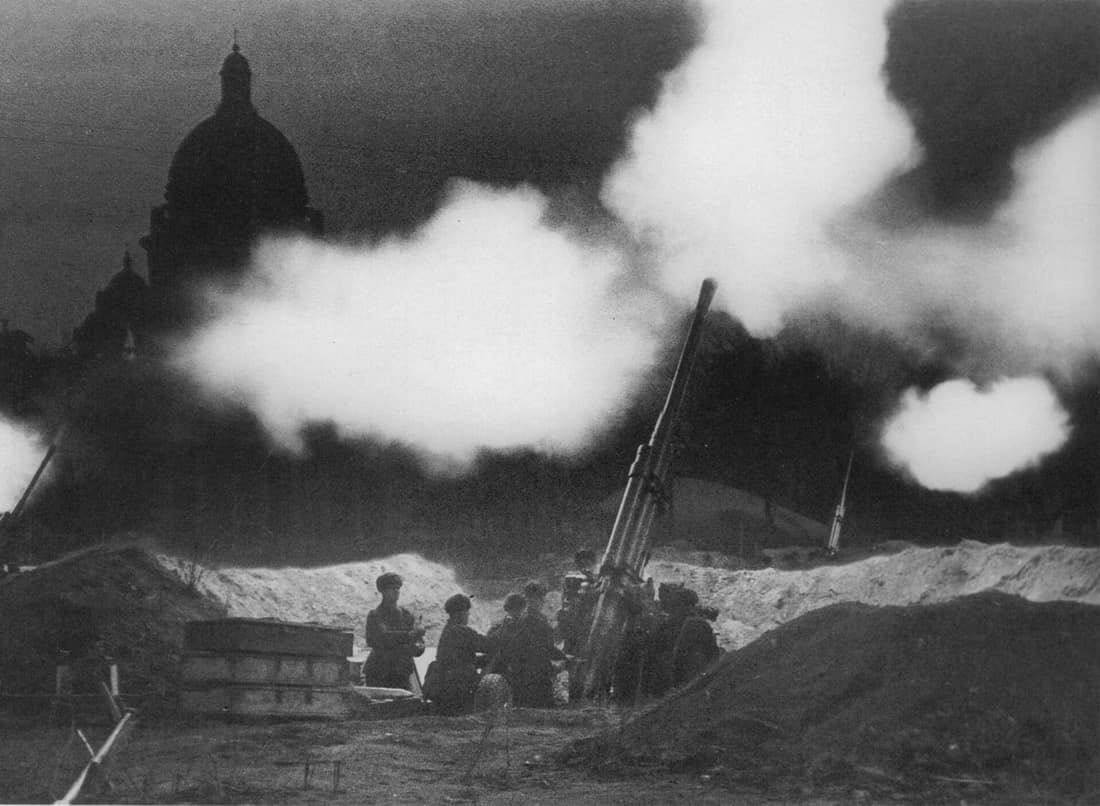
The Leningrad-Novgorod offensive opened on 14 January from the Oranienbaum bridgehead and the Pulkovo heights; Novgorod fell on the 20th and Gatchina on the 26th. On the 27th the city fires a salute of 324 guns and the blockade is declared over after 872 days. Between 800,000 and a million civilians had died, most of them in the first winter.