Eastern Front · Germany vs Soviet Union
Battle of Moscow
2 October 1941 – 7 January 1942
Operation Typhoon aimed to take Moscow before winter. After the Vyazma-Bryansk encirclements the advance bogged down in mud, then froze; German spearheads reached within 30 km of the Kremlin in early December. Zhukov's counteroffensive with fresh Siberian divisions threw Army Group Centre back 100 to 250 km.
Explore Battle of Moscow on the interactive map · Wikipedia
Day by day
— Typhoon
Army Group Centre attacks on the Moscow axis with 1.9 million men, 1,700 tanks and three panzer groups, against three Soviet fronts holding a line 400 kilometres long. Within a week most of those fronts are inside the Vyazma and Bryansk pockets. Moscow is 300 kilometres away and there is very little in between.
— Panic in Moscow
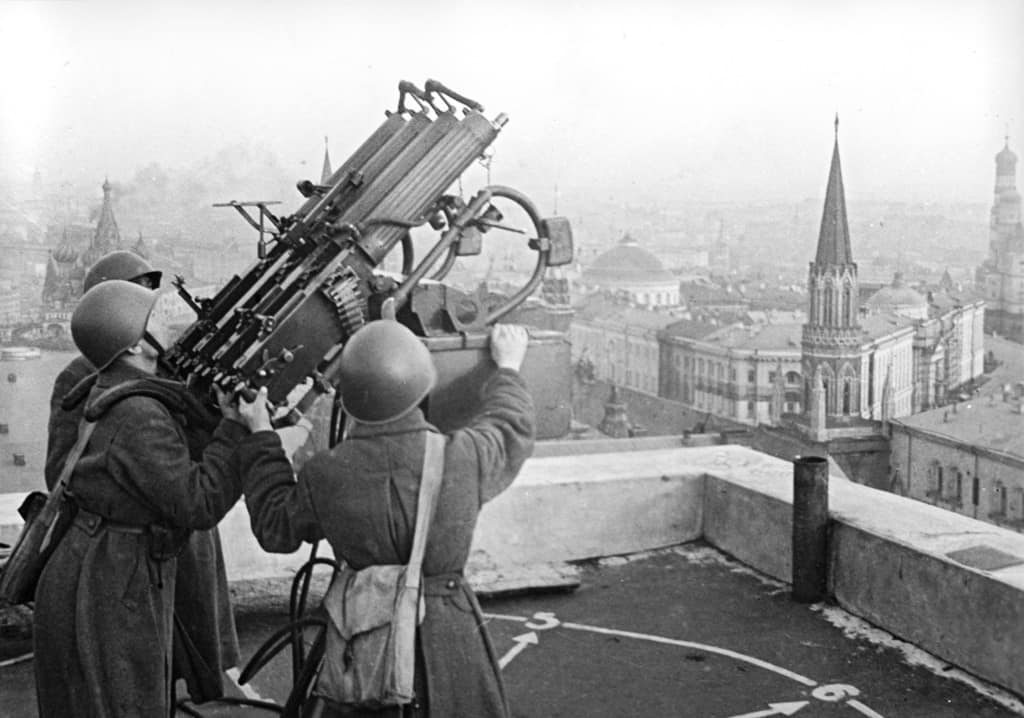
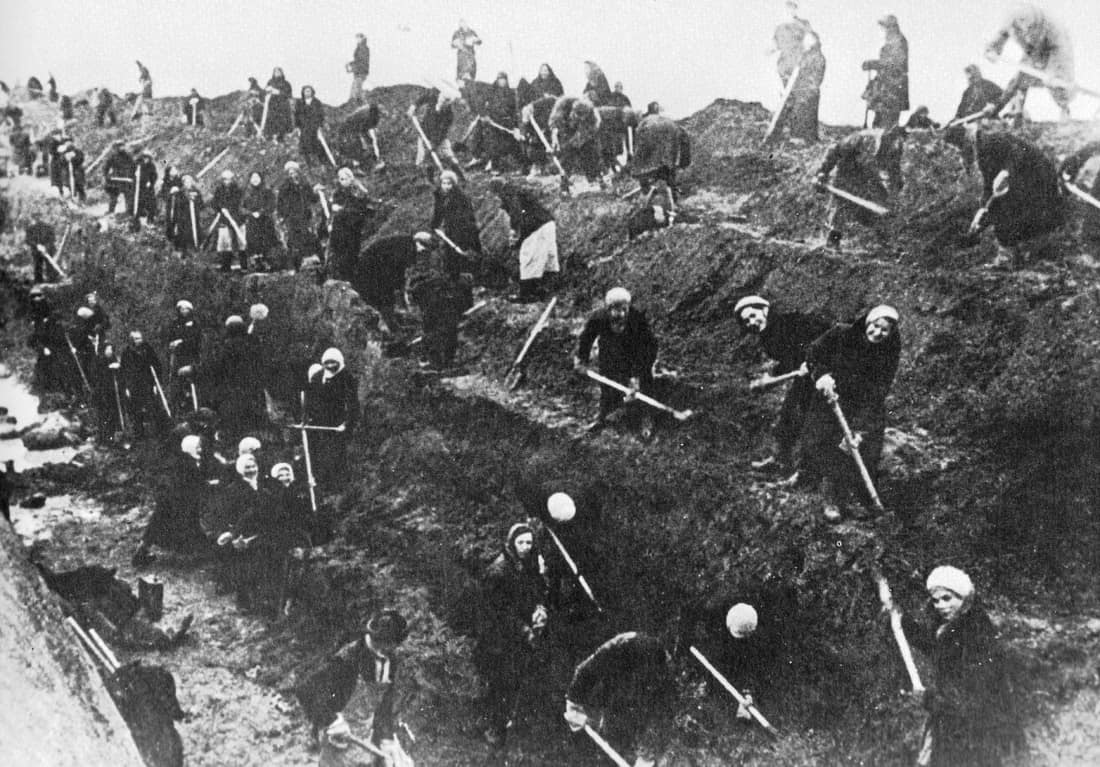
Kalinin fell on the 14th and the Mozhaisk line is being manned by cadets, militia and whatever comes off the trains from Siberia. On the 16th the ministries, the embassies and Lenin's body leave for Kuibyshev, the metro shuts, and shops and offices are looted; Stalin stays. A state of siege is declared on the 19th and order restored by shooting looters.
— The second push
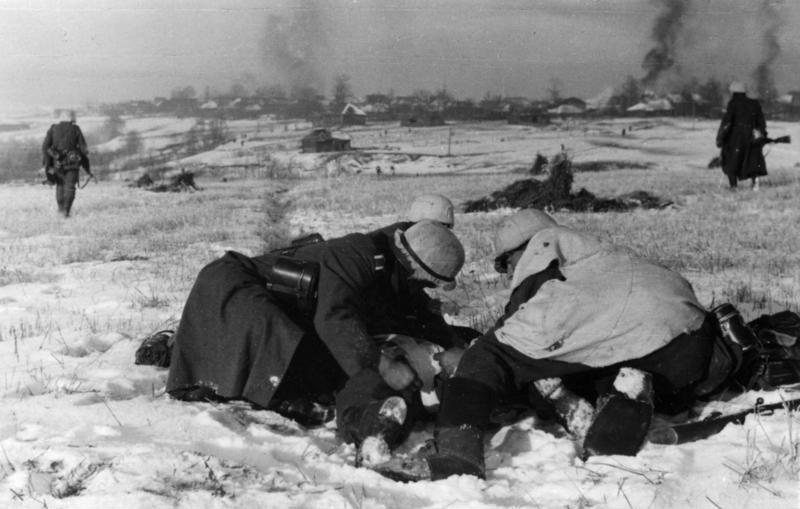
The ground has frozen hard enough for tanks and the offensive is resumed: Third and Fourth Panzer round the north through Klin and Istra, Guderian's Second Panzer Army round the south through Tula and Kashira. It is minus 20 and falling, and the German troops have no winter clothing because the war was to have been over. Tula holds out through the whole battle and is never taken.
— Khimki
The 2nd Panzer Division is at Krasnaya Polyana, 27 kilometres from the Kremlin, and a reconnaissance party of the 62nd Engineer Battalion reaches Khimki on the canal. In the south Guderian is stopped short of Kashira and pulls back from Venev. The thermometer touches minus 35, tank engines will not start and the German attack simply stops where it stands.
— The counteroffensive
Zhukov attacks along the whole front with three armies that the Germans did not know existed, built round divisions brought from the Far East once Sorge reported that Japan would go south. The Kalinin Front goes in on the 5th and the Western Front on the 6th, in deep snow and minus 30. Within a week Klin, Istra and Solnechnogorsk are back and the German front is walking west.
— Kalinin and Kaluga
Kalinin was retaken on 16 December and Kaluga on 30 December; Army Group Centre has been pushed back between 100 and 250 kilometres and Hitler has sacked Bock, Guderian and Hoepner for wanting to withdraw further. The first phase ends on 7 January and the Rzhev-Vyazma offensive begins, which will grind on for three months and take nothing. Moscow is safe and the war will last another three and a half years.